
1. Dharamshala, in the Rain
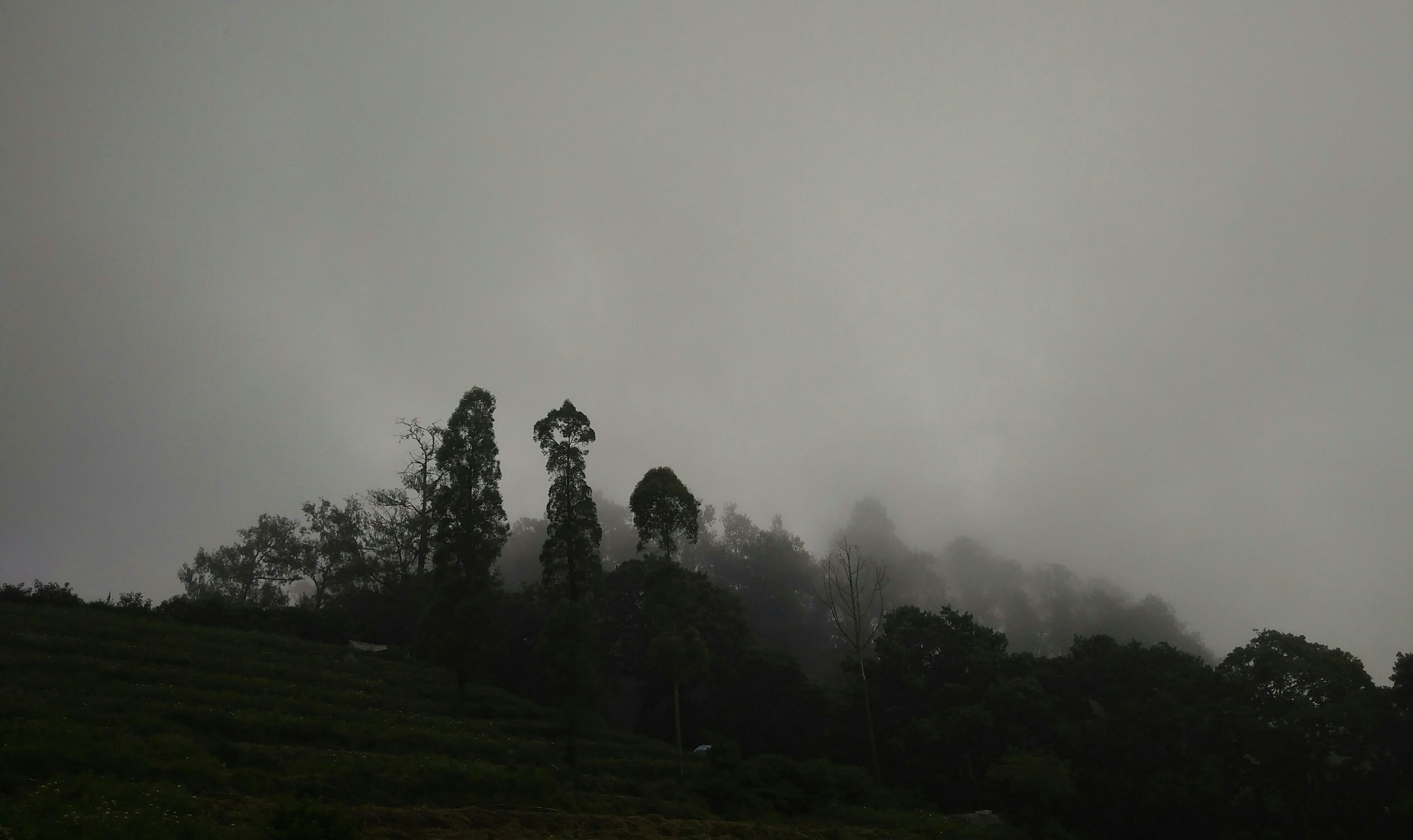
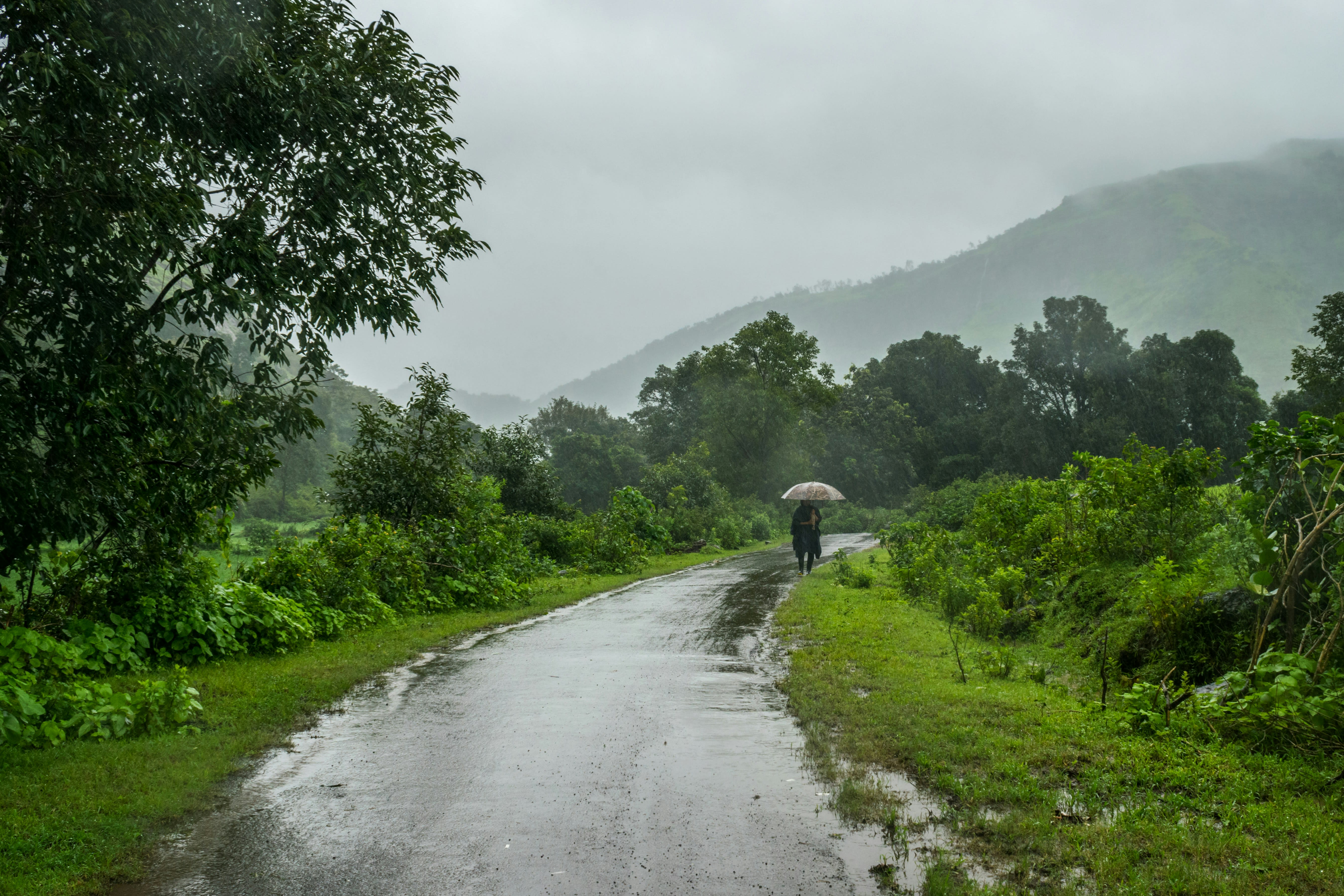
The rain in Dharamshala that summer felt restless. It came down in hard bursts, then stopped mid-thought, then started again as if it had remembered something urgent. I was walking with an umbrella that kept turning inside out, my shoes squelching on the wet road. The valley smelled of pine needles and stone, sharp and clean, a smell you couldn’t bottle if you tried.
I wasn’t looking for anything. Which is often when something finds you.
Half-hidden behind tall deodars stood an old church. Its grey stone walls were slick with moss, its windows fogged, its wooden door propped open. Not inviting, exactly. More like indifferent. I went in, shaking the water off my umbrella.
Inside it was dim. The benches creaked in the half-light. The air smelled of wood, damp, and rusting metal. I came out quickly. Just then I saw her, a cloud of pink energy. A girl, maybe five, maybe six. She had that bright, bubbling presence children have before self-consciousness sets in. I knew or I hoped what I wanted to hear even before I asked the question. She told me her name. It was my name too.
Yet, I don’t know why it startled me so much. To hear my own name returned to me by a stranger, spoken in a voice so young it almost felt borrowed. For a moment, I didn’t know which of us was the echo. She laughed at the coincidence, a sound so quick and unguarded it seemed to fill the entire church.
And even as I laughed with her, some part of me was already betraying the moment. I was rehearsing it. Filing it away for later. This is a story, I thought.
2. The Compulsion to Frame
That is how we live now not simply inside moments, but slightly outside them too, angling for the right frame. A picture here, a video there. We are trained to evaluate each experience for its potential to travel. Will this post well? Can this become a caption?
Even in that stone church, I could feel it. The rain, the moss, the namesake girl. The ingredients of a neat story. But when I sat down later to write it, the neatness vanished. The lived moment was round and alive; my words flattened it, pressed it into a stamp.
Walter Benjamin once wrote that real works of art carry an “aura” the glow of an unrepeatable presence. Reproduction, he said, strips that away. Maybe memories have their aura too. And maybe writing, or posting, often erases more than it preserves.
3. The Smell of Rain
I had failed before.
Take the smell of the first rain on dry earth. Petrichor. A word I have always loved, though it never quite delivers the experience. Scientists will tell you it’s plant oils and bacterial spores. Poets call it nostalgia in the air. But in the moment, it is neither science nor poetry. It is a breath that feels older than language.
I’ve tried to describe it on the page and never succeeded. It always comes out flat, like a bad translation. The smell refuses me.
Susan Sontag once argued that to photograph something is to appropriate it to turn it into a possession. I sometimes think writing does the same. To describe is to claim. But petrichor is not ours to claim. It arrives, overwhelms, disappears. It belongs to the air, not to us.
4. Laughter That Slips Away
The girl’s laughter that day carried the same refusal. Later, when I tried to trap it in a sentence, it shrank. She giggled. Two words that erased everything – the uneven breaths, the squeal that turned into a cough, the shoulders shaking, the echo bouncing off stone.
Real laughter resists packaging. And yet our culture keeps trying: stock images of people laughing over salads, influencers posting reels of “candid” joy. We can stage a laugh, but our bodies know the difference.
What unsettled me most was not just the coincidence of her name, but how free she was from that rehearsal. Her joy wasn’t waiting for an audience. Mine always does. She was my namesake, but she was also my opposite.
5. The Crackle of Fear
A few years ago I was walking in the forest area of Ramgarh. The rain had eased, leaving the ground slick and the air heavy with pine resin. Suddenly, behind me, a branch cracked.
My body froze. My head said squirrel, but my blood said predator. The fear surged faster than thought a quickening pulse, a tightening in the chest, the hair on my arms standing alert.
Later I wrote it down, and already it had changed. On the page it became anecdote, almost comic. What was primal in the body became flat in the notebook.
Fear, too, resists capture. Yet we live in a world where fear is endlessly packaged – news alerts, disaster reels, trending panic. We consume it as if it belonged to us. But the real thing, the sudden crack in the forest, belongs to the body. Not the feed.
6. Mystery Against the Market
This is what I keep circling back to: why do we feel the need to capture everything?
Once, people wrote letters. And letters carried mystery. The pauses, the hesitations, the crossings-out. The gaps between sentences held as much weight as the sentences themselves. You could not scroll a letter. You had to sit with it, feel its absences.
Books were slow too. They trusted silence, they didn’t hurry toward circulation. The private was not a defect. What was unsent, unread, unfinished carried its own dignity.
Now even silence is monetized, turned into “mindfulness content.” Even grief has templates: the black-and-white photo, the candle emoji. We trade intimacy for engagement.
Benjamin warned us that aura disappears with reproduction. What he couldn’t have imagined is how willingly we would embrace the loss. How mystery itself would come to feel like a mistake.
7. The Refusal
And so I’ve begun to value the things that refuse me. The smell of rain. The crackle in the forest. The girl’s laughter in the church.
They will not flatten. They won’t let me own them, not through writing, not through posting. They insist on being themselves – vivid, unsimplified, alive.
I used to think this was a failure. Now I think it’s survival. In resisting, they protect their dignity.
8. The Namesake I Still Carry
The girl eventually darted back out into the drizzle, her laughter trailing behind her. I stood there longer, umbrella dripping, unsettled.
Maybe because she reminded me of a version of myself I can’t return to. A self before the habit of framing, before the compulsion to turn life into story. She didn’t need to capture the moment. She was the moment.
I couldn’t write her then. I can’t write her now. But that is why I still remember her. The moss on the stone, the smell of damp wood, her laughter ricocheting through the hall. These remain sharper than anything I’ve ever published.
9. An Invitation
When I think back on Dharamshala, I don’t remember the drafts I wrote and discarded. I remember the things that refused me. The smell, the sound, the crackle, the girl.
So I wonder: what are yours? What smell or sound or fleeting fear still clings to you because it never let you write it down?
Not everything needs to be captured. Not everything needs to be shared. Some moments live longer when they resist.
Perhaps that is their gift to us – to remind us that life is larger than our feeds, and that mystery still belongs somewhere.