When I typed “Founder” into my LinkedIn headline, the algorithm clapped louder than any human. Notifications appeared instantly. Strangers endorsed me for skills I didn’t know I had. My network congratulated me with folded-hand emojis. For a moment I wondered if the simple act of changing a word might be the most successful product I ever launched.
The irony is that nothing in my daily life had changed. My Wi Fi still sputtered. My inbox remained a desert. My mother still explained to nosy relatives that I was “between things.” Yet by claiming that one word, I stepped into an entire industry of books, podcasts, and workshops designed to orbit around me. It felt less like starting a venture and more like being cast in a role that had been pre-written.
A Freelancer – A Founder
Not long ago, I would simply have been a freelancer. A person who sent invoices and waited for payments that always arrived late. Freelancers exist in the shadows of legitimacy. You are talented, but temporary. Disposable. The word itself sounds like a mercenary with no flag.
By calling myself a founder, I entered a different category. Overnight, I was not just a provider of services. I was a “visionary.” A potential case study. A protagonist in a story that culture has rehearsed so many times it now runs on autopilot.
The comedy was not in the work itself. The work remained the same. The comedy was in the costume change. The freelancer is asked what they charge. The founder is asked what they dream.
The Starter Pack
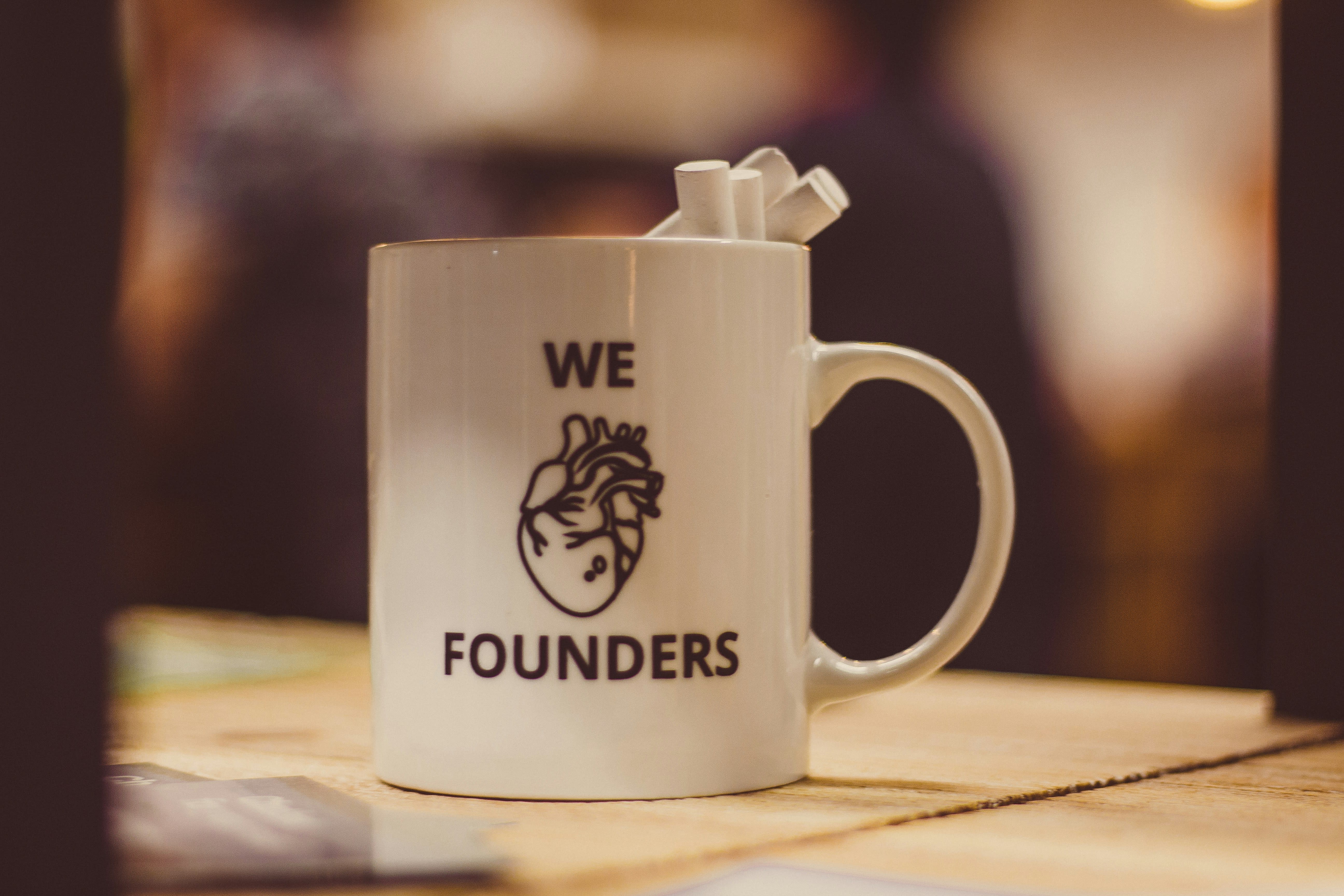
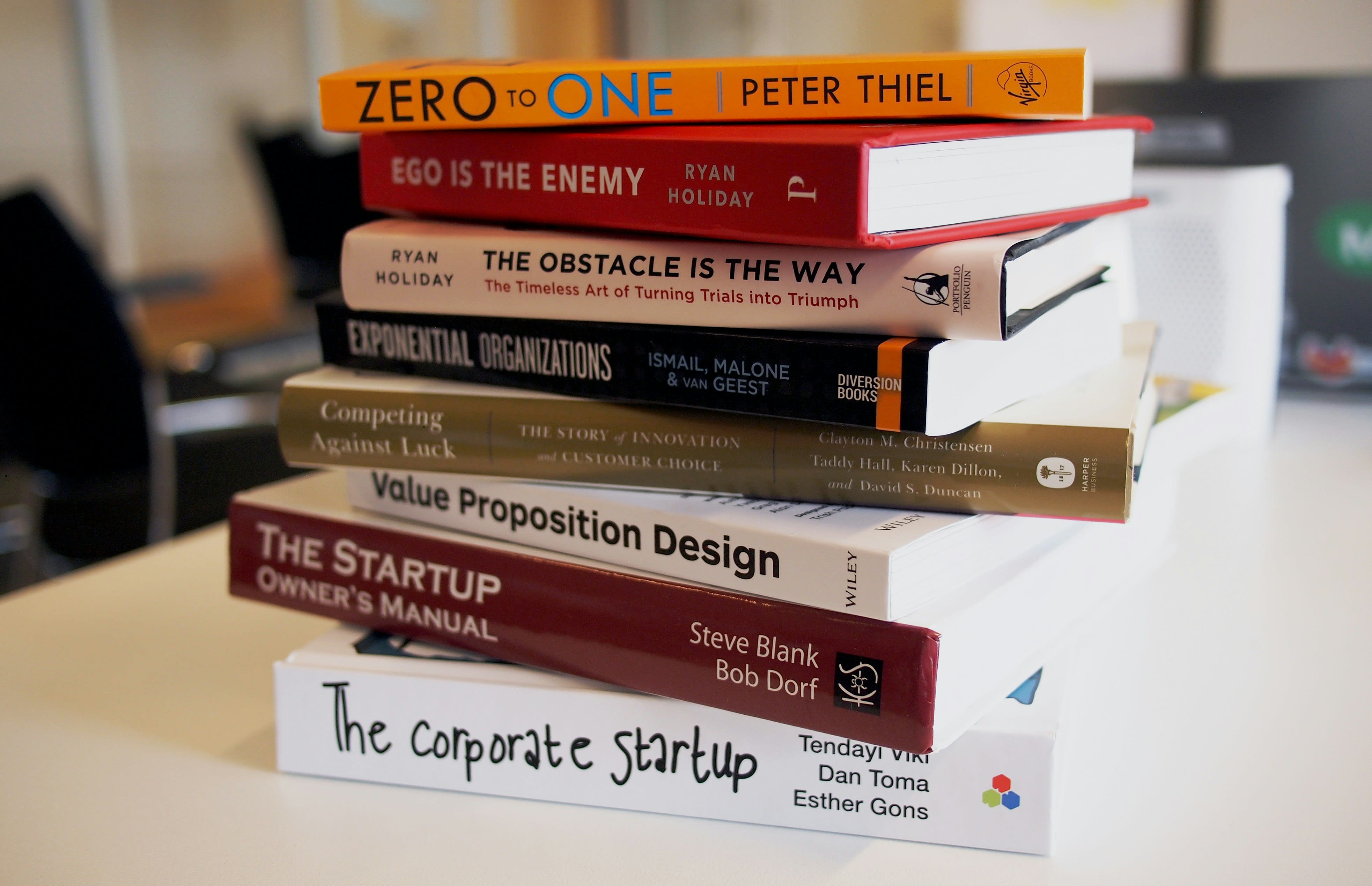
The role comes with a starter pack. The books are always first. The Lean Startup promises that if I measure enough and pivot enough, success will cooperate. Zero to One offers contrarian secrets, though most mornings I am still struggling to get from zero to breakfast. Atomic Habits insists that my obstacle is not capital or competition but my inconsistent morning routine.
These books soothe because they compress chaos into diagrams. Struggle becomes a funnel. Hope becomes a quadrant. Failure becomes a chart with arrows pointing to “resilience.” Reading them is like watching a Bollywood item song. Everyone knows it interrupts the story. Everyone claps anyway.
The Podcast Religion
Then come the podcasts. On How I Built This, empires rise out of garages. The arc is elegant, the lessons obvious in retrospect. Struggle. Collapse. Miracle. Triumph. Listening, I know I am being seduced by a polished script. Yet I still hope to hear the hidden code that will unlock my own ascent.
Meanwhile, my own life resists the arc. My progress resembles Delhi traffic: sudden acceleration, inexplicable halts, a honk from nowhere, and the occasional cow blocking the road. Chaos is not elegant. It is messy, boring, and often smells faintly of panic.
The mismatch is not that these founders succeeded. It is that their chaos has been retrofitted into parables. Listening to them, I sometimes feel like a background dancer in a Bollywood musical. The hero moves effortlessly. I try to follow the steps. I trip over my own feet.
Imaginary Exits
My private fantasies are not board meetings. They are cinematic exits. In the backseat of a rattling cab, I imagine my app being acquired for millions. While haggling with an auto driver over twenty rupees, I picture myself negotiating a term sheet on a private jet.
The joke is not in dreaming too big. The joke is in how easily those dreams coexist with the banal. The meter beeps, the driver demands cash, and I am back to calculating whether my subscriptions can be paid this month. The jet dissolves, leaving only the smell of exhaust.
This is the founder’s private theatre. The mind projects empires onto cracked windshields. For a few moments, the journey feels expansive. Then the cab stops, and I step out into potholes.
The Workshop Carousel
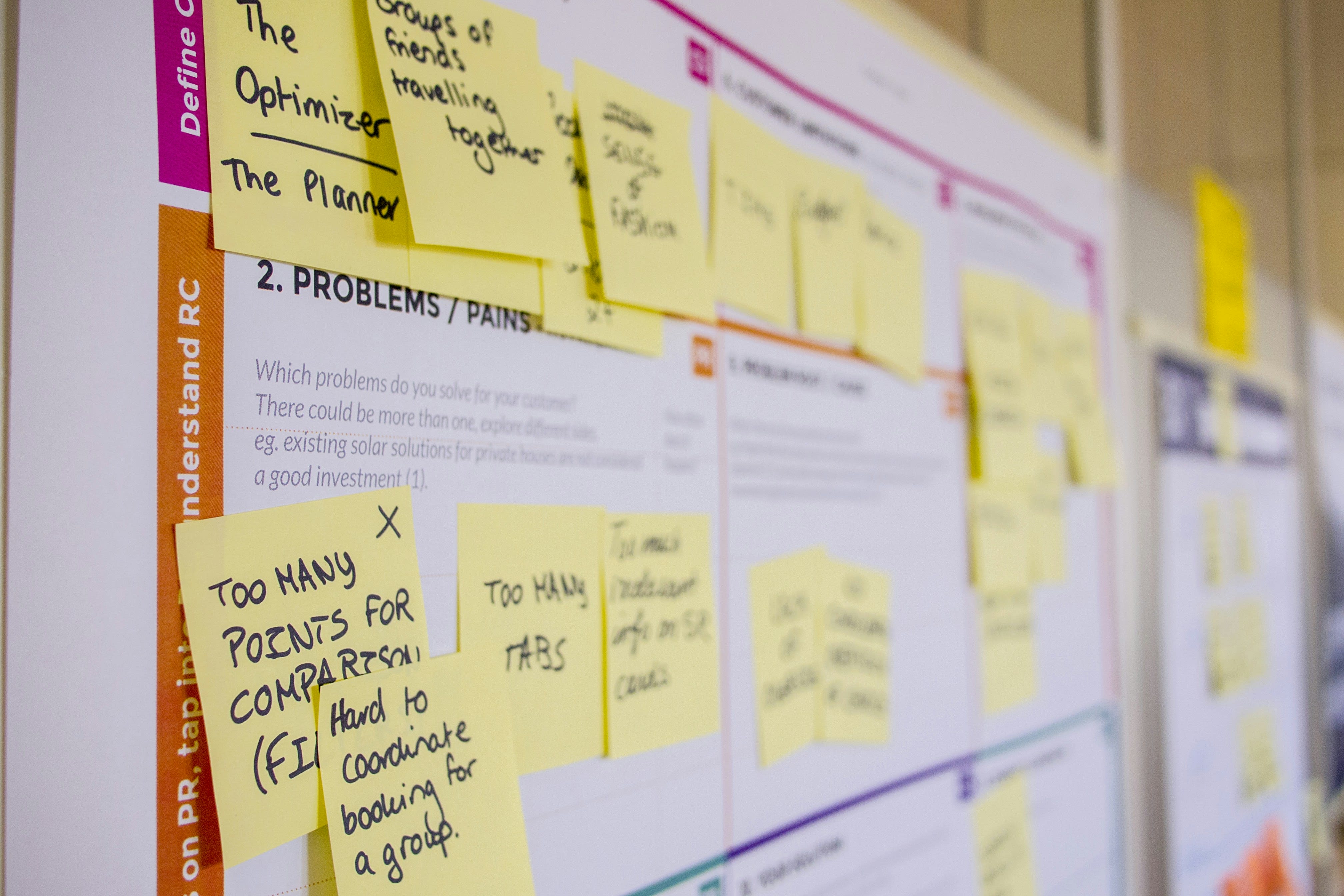
Soon after, the workshops arrive. There is a workshop for storytelling, another for resilience, one for mindfulness, another for raising capital, and another for recovering from the exhaustion of raising capital. Each promises the missing ingredient. Each insists that this time, the formula will work.
I should know. I also announce workshops. As a coach, I stand on both sides of the stage. I offer tools for meaning while privately wondering if I am another craftsman in the vast bazaar of founder self-improvement. One week I am teaching presence. The next week I am attending productivity. It feels like a carousel that never stops turning.
Sometimes I imagine an expo where every founder and coach in the world gathers in one giant hall. Half the hall delivers workshops, the other half attends, and by evening everyone switches sides. Nothing is built, but everyone leaves with a certificate.
The Breakdown Industry
Hustle is glorified, but so is collapse. Burnout is packaged into TED Talks. Failure becomes a Twitter thread with twelve lessons. Tears are narrated into microphones. There is more content about founders breaking than about founders building.
I sometimes wonder if failure without narration even counts. If I collapse in private, with no audience, is it still a breakdown or just fatigue? The demand now is not just to endure but to confess. “What I Learned Losing 10 Crores” is a better product than the company that lost it.
Bollywood has always known this formula. No melodrama is complete without a rain-soaked breakdown. The crying scene arrives, the violins swell, and the hero emerges renewed. Founders follow the same script. The only difference is the props. Instead of violins, there is a podcast microphone. Instead of rain machines, there are hashtags.
Carrie Bradshaw at the Window
Sometimes I catch myself staging my own Carrie Bradshaw moment. Sitting by a window, coffee in hand, laptop on the table, I imagine a camera tracking my thoughts. “If every freelancer is now a founder,” I would type in my imaginary column, “then who is left to be simply employed?”
It is a self-conscious performance, but also a revealing one. Founderhood has turned even solitude into theatre. Every quiet reflection feels like it could be an essay. Every failure feels like a lesson in disguise. Life becomes raw material, waiting to be narrated.

The Loneliness Behind the Logo
Behind the logo I sketched at 2 AM is not a team. It is me, carrying contradictions. I am the visionary and the intern. I write strategy memos in the morning and chase invoices at night. I announce leadership workshops in the evening and then lie awake wondering if I am leading anyone at all.
The loneliness is steady, not dramatic. It is the silence after sending an email to “info@” and refreshing the inbox five times. It is watching a customer churn and realizing there is no one to share the disappointment with. It is the strange embarrassment of referring to myself as “we,” not out of ambition but out of shame.
Lagaan remains the truest metaphor. One barefoot villager facing an empire with sticks and patched clothing. The odds belong to folklore, not finance. Yet once you are on the field, the unreality fades. You play. Sometimes, impossibly, you win.
Curtain Call
The strangest part of calling myself a founder is not the theatre. It is how easily everyone else accepts it. Friends introduce me as “running my own company.” LinkedIn rewards the headline. Even the folks at the coffee shop asks how the “startup” is doing.
Everyone knows the Switzerland mountains in Bollywood romances are cardboard. Everyone knows the rain is recycled water. Yet audiences still cheer. They suspend disbelief. They clap, they whistle, they wait for the next scene. Just like that I also keep performing. Not because I believe the set is real, but because I need the applause to carry me to the next day. Beneath the irony there is something simpler. To call myself a founder is to admit that I am building on air and hoping it holds. It is comedy, yes, but it is also a kind of faith.
In the quiet moments, when the laptop light reflects against the window and I see only my own face staring back, I remember why the theatre continues. Because if I stop performing the role, even for a day, the story ends. And so I whisper “we” when I mean “me.” I keep typing. I keep imagining. I keep building.
And the curtain does not fall. Not yet.