1) My Drive, My Shrine
My Google Drive is 80 percent full. After years of noble resistance, I am about to do what I swore I’d never do: buy more space. Not because I produce great art. Because I collect it. Or rather, I collect the possibility of it. There are 3,000 unread PDFs, 47 versions of the same presentation, and a colony of “to-read” articles from 2019 that have hardened into digital stalactites. I open the storage meter the way some people step on a weighing scale – with ritual self-reproach and a promise to do better – and then immediately save a 450-page report called “Essential Handbook of Irrigation Policy in Sub-Saharan Africa.” I close the tab and feel virtuous.
Organizing helps for three days. I arrange folders like a fussy shopkeeper who believes in labels, then forget the labels exist. Somewhere is a directory called “Final,” inside which is “Final_Final,” inside which is “Final_Final_UseThisOne.” Descend a few layers and the folders begin to hum; I can’t tell whether I’ve reached the bottom or just another level of embarrassment. If Inception were made about knowledge hoarding, the totem wouldn’t be a spinning top – it would be a bookmark that never opens.
2) Before Backups: When Memory Was Worn, Not Stored
Once upon a time, knowledge had to be carried in the body. Aboriginal Australians mapped their world in songlines – melodies that held routes, animals, seasons, and law. To forget a verse was to lose the path home. In India, Vedic texts lived for centuries in mouths and ears, calibrated down to accent and breath. West African griots wore dynastic history like heirloom jewelry. None of this was saved “for later.” It was performed. The archive was alive.
Imagine a Cro-Magnon elder telling the clan, “I have bookmarked the origin myth.” The looks alone would have sent him into exile. There were no bookmarks. There was only the next retelling. Knowledge then was tailored to the wearer, fitted to the moment. Today we prefer ready-to-forget, bulk-buy, “one size fits nobody.”
3) Welcome to the Global All-You-Can-Save Buffet
Every culture has developed its signature dish in this banquet of excess.
Japan contributed tsundoku, that elegant word for acquiring reading material and letting it pile up, unread. The word is a public service because it lets us point at a teetering stack and say, with dignity, that we are participating in a recognized cultural practice.
India, never to be outdone, perfected the family WhatsApp forward. There’s always one uncle who wakes at five, performs a surya namaskar, and then dutifully forwards twenty-seven articles on urban farming, gut health, and the gold price. You will not read them, but you will feel both informed and accused.
The West industrialized backlog through subscriptions. Newsletters are the new gym membership. We sign up with good intentions and then admire the branding while not attending a single session. Podcasts arrive by the dozen. Some people listen at 2x speed and call it a lifestyle. When asked what any episode contained, they reply, “so much,” which is technically true and spiritually empty.
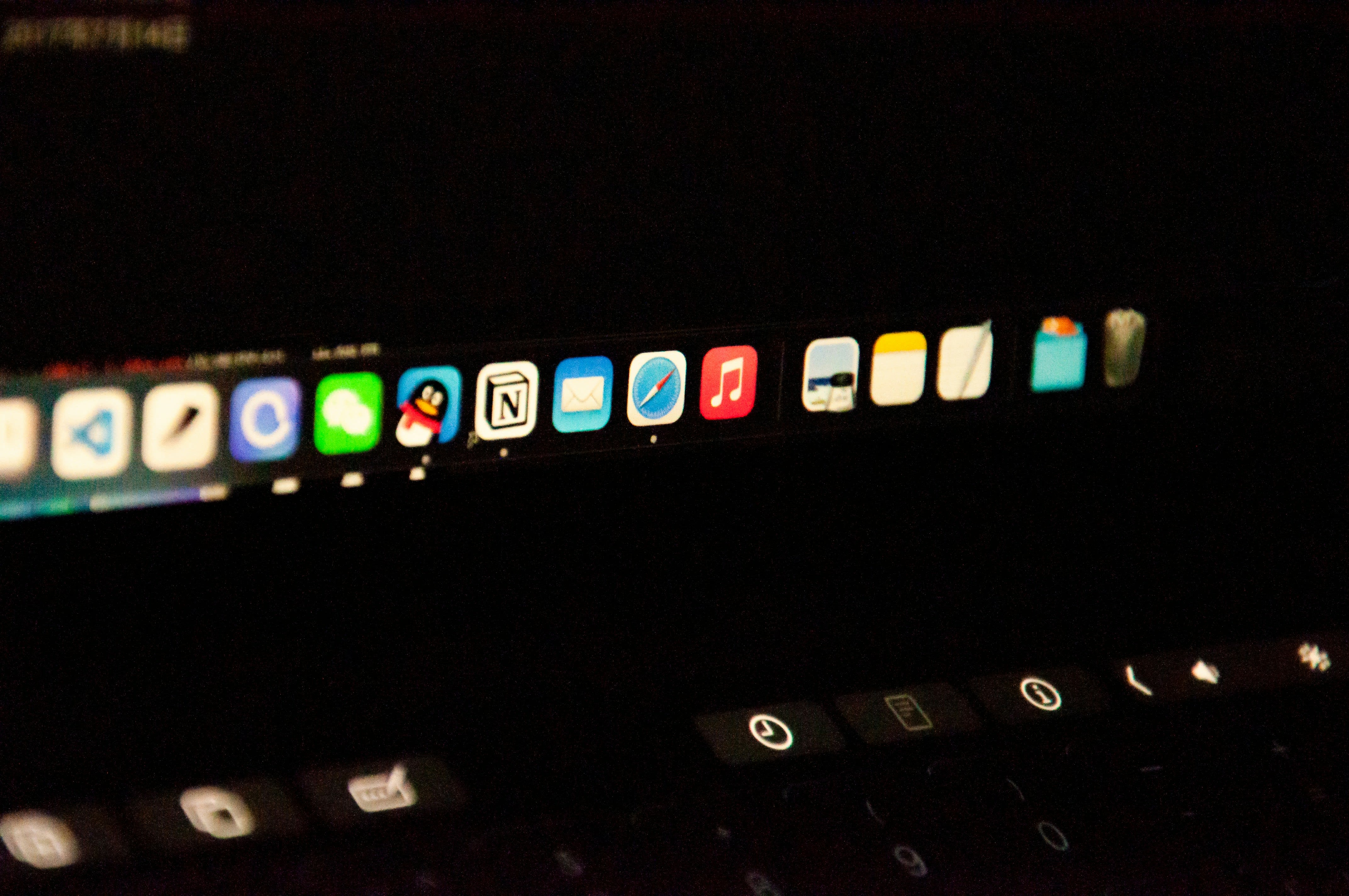
Meanwhile, the apps multiply. The average person has something like 80+ installed, uses around 30 in a month, and about 9 in a day which means the majority sit around like shoes we bought on sale: almost new, rarely worn outdoors.
Photos are the other wing of the buffet. Humanity now takes on the order of two trillion pictures a year roughly five billion a day. We are less a species than a camera roll. Our galleries are museums of thumb-blurred sunsets and the inside of our pockets.
Online, we don’t read so much as graze. A classic finding (still depressingly current) is that on a typical web page, people read at most a sliver of the words – closer to one-fifth than one-quarter before moving on. Which means our tabs are not a reading list. They are a mood board.
It isn’t only civilians. Academia produces papers the way bakeries produce buns at dawn. A widely repeated claim suggests many papers are scarcely read outside their tiny circle, and while bibliometric folks rightly argue the picture varies by field, the joke lands because the pattern is familiar: we publish, we cite, do we digest?
4) Too Many Tabs, Too Many Apps, Too Many Shoes
If you want a unified theory of modern life, try this: we all own more of everything than our attention can wear.
Open my phone and there are four to-do apps, each promising to fix the other three. There’s a meditation app I haven’t opened since the free trial, a notes app where I’ve noted that I need fewer notes apps, and an audiobook app where I fast-forward through introductions to “optimize my time,” then forget the thesis by dinner. The Settings icon is my most-used, which feels poetic; it’s where we go to configure our intentions.
The camera roll is its own town: thousands of images I’ll never revisit except in court as evidence that on June 14th I ate idli that looks exactly like every other idli I have ever eaten. Somewhere is a parking sign I thought I’d need, a whiteboard from a meeting that solved nothing, and forty-nine attempts to photograph the moon. I tell myself these are memories. In truth, they are storage. (On the upside, an algorithm will someday make a “Memory” of that parking sign and I will briefly cry in a cab.)
Even shoes conspire. A few reliable pairs do all the work. The rest are decorative ideas. The brain seems similar. A handful of sturdy concepts carry us through; the rest remain on the rack with their tags on.
At home, the bookshelf stares like a disapproving relative in a family drama. Choose your film. Mine is Kabhi Khushi Kabhie Gham, and one hard-covered classic looks at me with Jaya Bachchan’s eyes. It says nothing. It does not need to.
5) The Body Keeps the Score, The Mind Keeps the Tabs
Excess has symptoms.
There’s the moment you assemble an opinion from a headline and two adjectives. There’s the buzzing guilt perched on your shoulder when you pass the bookshelf. There’s the odd sensation of defending a position you didn’t have time to acquire. There’s the night you save twenty longreads, followed by the morning you can’t remember a single title.
There is also a new medical condition I am qualified to diagnose: knowledge reflux. The intake is impressive, the absorption is minimal, and the aftertaste is smug and slightly sour.
Support groups exist, at least in my imagination. “Hello, I’m Ira, and I haven’t read a single item in my Saved folder since 2021.” “Hello, Ira.” “I opened one in 2022 to copy a quote into Notion, where it is thriving as part of a page titled ‘Someday.’”
The office offers its own theatre. Someone says, “I’ll share the deck,” and what arrives is version twelve of “Q3 Strategic Narrative,” whose slides are a polite field of identical boxes. Everyone nods gravely, as if in the presence of scripture. Two weeks later, a new deck is born. The original remains in the cloud, untouched, like a myth we inherited but never practiced.
6) Diet Culture, Intellectual Edition
Naturally, we invent diets. Inbox Zero. Digital sabbaths. App fasts. Quarterly reviews. People delete their social media, then write essays about deleting their social media, then share those essays on social media. Minimalists advise us to remove anything that doesn’t “spark joy,” which, applied literally, would empty the tax folder and the marriage certificate with equal efficiency.
Reading challenges turn books into calories. Fifty-two in a year, a hundred if you’re training for a marathon. The point isn’t to enjoy; the point is to complete. Goodreads becomes a leaderboard. The books whisper to each other at night.
There are retreats that promise to reset your attention. You pay to sit in a room without Wi-Fi, drink tea, and pretend you invented looking at trees. Within days of returning, you’ve subscribed to three newsletters about attention, each recommending five more books about attention, and the wheel is a blur again.
Even “curation” has been industrialized. We now curate the best curators who curate the best curations. It’s as if a thousand personal shoppers were sending our minds more clothes when the closet can’t close.
7) A Very Short Anthropological Detour
What changed isn’t our appetite. Humans have always been greedy for patterns. What changed is the cost of saving things. The price collapsed to near zero, so we hoard the way water fills a valley. We’ve made a new religion out of deferred reading. The altar is the Save button. The incense is the Notification. The chant is “later.”
The trouble is that later is a myth. Later is where our best selves live, and they’re fully booked.
8) Two Modest Scenes From Real Life
Scene one. A friend sends me a brilliant essay on attention. I reply with gratitude, then drag it into a folder called “Attention.” The act is so virtuous that I no longer need to read it. I have honored the essay by placing it among its cousins.
Scene two. I open my phone to find seven app updates. One promises a bold new design language. Another assures me the onboarding flow is more “delightful.” I have no idea what my goals are, but it’s comforting to learn the flows are delighted. Hours later, I count and realize I used eight apps, as usual. The stats say this is normal: most of us cycle through a small set, ignoring the rest. The rest, however, do not ignore us. They update in the night and dream of our thumbs.
9) A Brief Intermission for Data, Because Satire Works Better with Evidence
Let’s bow to a few numbers, since they are part of the joke.
People read only a slice of most web pages before moving on closer to 20 percent than 28 in many cases. Most paragraphs are stage props that never get a line. The cast is enormous; the audience is on their phones.
Humanity takes on the order of five billion photos a day, roughly two trillion a year. You could tile the moon, but you’d first need a committee to deduplicate the sunsets.
And yes, tsundoku is real. If you’re reading this in a room where vertical stacks resemble modernist sculpture, please accept this citation as absolution.
10) The Comedy of Solutions
What would a real solution look like, if we weren’t busy performing solutions for each other?
We could delete at the speed of acquisition, but we won’t. We could read slowly, but we prefer to collect quickly. We could unsubscribe, but then how would the inbox remind us that life is happening elsewhere.
Some days I fantasize about a Ministry of Later arriving at your door with a clipboard. “You have 412 saved articles and 9,713 photos of clouds. Kindly pick two.” Perhaps that’s tyranny. Perhaps it’s mercy.
Another scheme: Attention Zakat. Give away one-tenth of your saved links each month to a friend. Watch them grow calmer as you become wild-eyed. Repeat until the friendship ends.
Office version: once a quarter we print every slide nobody used and hold a memorial. We invite the decks to speak. One clears its throat: “I was born in Q2 with a vision to harmonize synergies across verticals.” We apologize. We promise to do better. We do not do better.
11) Two Movie Moments, Carefully Applied
There’s that scene in The Devil Wears Prada where power is expressed as the right to keep, discard, and define taste. Now imagine that power applied to your Drive. You click “Delete,” feel like Miranda Priestly for twelve minutes, then discover a folder named “Old” and the monarchy returns.
And there’s Inception, which I’ve already invoked – appropriate because our folders do feel like dreams within dreams. We keep descending, believing meaning lives at the bottom. It does not. It lives in the wearing.
12) The Honest Ending
Here is what I suspect. We will die surrounded by stacks of books we never read, apps we never opened, photos we never named, decks nobody presented, and tabs that wanted our eyes for three minutes and didn’t get them.
This is not a sin. It is a joke. It reveals us. Curiosity outruns capacity. Appetite outruns digestion. The species remains, at heart, greedy for knowledge and hilariously bad at scheduling.
One day, when archaeologists excavate our cloud backups, they won’t marvel that we knew so much. They’ll marvel that we saved so much we never once had space to process it. They will catalog our PDFs like idols, our screenshots like votive offerings, our camera rolls like open-air markets. Then they will write their report, upload it – and forget where they put it.
Until then, keep downloading, bookmarking, highlighting, subscribing, saving, and screenshotting. Sit in your living room of later. Admire your collections. Wear the few ideas that fit. Let the others remain on their hangers. And when the storage warning appears, smile. You’re not failing. You’re a citizen in good standing of a very large museum.
Admission is free. The gift shop is excellent.