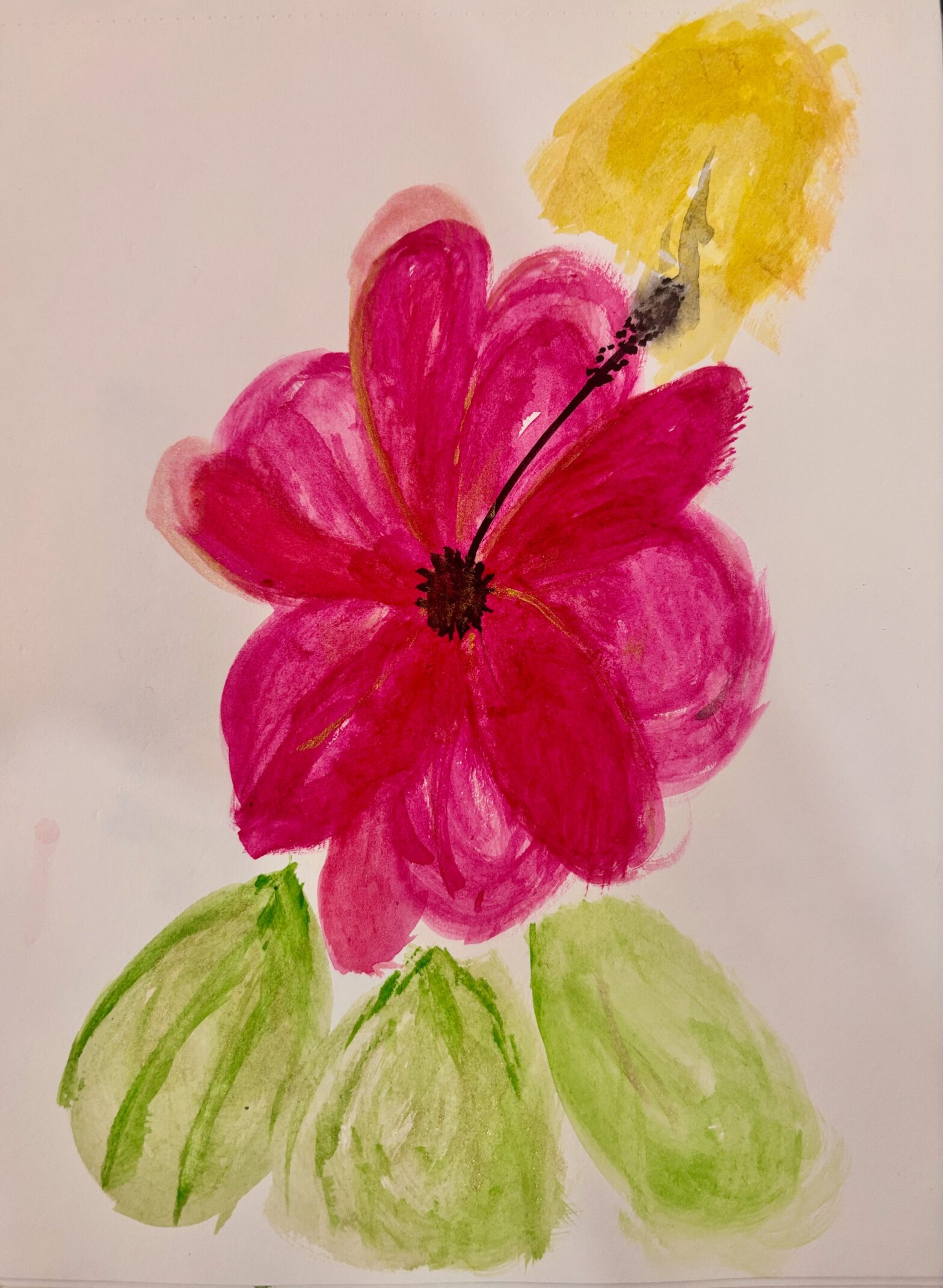
Optics, urgency, and the quiet collapse of long-term thinking

Last Sunday, at exactly 12.30 PM, I did something that would have horrified my younger self. I let a session run over by six minutes. We were just wrapping up a session and everyone was sharing what they are taking away and how they want to move forward. The kind of moment every coach lives for. But instead of being fully present for the moment, part of my brain was having a complete meltdown. Five minutes over. This is unprofessional. This is exactly what separates the amateurs from the real coaches. Thanks for reading Ira’s Substack! Subscribe for free to receive new posts and support my work. When the session ended, everyone was happy and still buzzing from all the art that the group created. Nobody minded the overrun except me. I am old enough, and I have been doing this for years. I know I’m good at what I do. Yet here I was, sitting in my home office, convinced that five minutes had somehow undone years of credibility. Here’s what I’ve learned: perfectionism isn’t the enemy of mediocrity. It’s the enemy of excellence. The Script We Follow Let me tell you about the script that runs most of our lives. In middle class Indian culture, it goes like this: Study hard. Score well. Get a stable job. Make your family proud. Follow the path that looks successful from the outside. I followed that script for decades. I was excellent at following scripts. I could score high, perform well, check every box that society handed me. But somewhere along the way, I realized something troubling. The life I was building felt like it belonged to someone else. When I finally decided to leave the expected path and become a coach, the voices in my head were brutal. Who do you think you are? You had security. What if this fails? What will people say? In India, when a woman in her forties chooses to start her own venture instead of staying safely employed, people notice. They wait for you to fail. They measure your success against the stability you gave up. Every mistake becomes evidence that you should have stayed put. So I became obsessed with proving them wrong. I had to be flawless. Every session had to be perfect. Every interaction had to demonstrate that I’d made the right choice. What I didn’t know then is that the harder you try to be perfect, the worse you actually get. When your brain is busy watching yourself perform, it can’t focus on actually performing. I was literally thinking my way out of doing good work. The Perfectionist’s Trap Here’s the thing about perfectionism that nobody told me: the more I focussed on not screwing up, the more likely I was to screw up. When half my attention was on monitoring my performance, neither my work nor my self-monitoring gets done well. I started timing every pause in my sessions, analyzing every word choice, second-guessing every response. I was like a singer who became so worried about hitting the wrong note that she forgot about the song. The exhaustion was incredible. I was good at my work, but I wasn’t present for it. I was working while trapped in my own mental prison. Then came the moment that changed everything. Not a dramatic revelation, but something so ordinary it almost seems silly. The Day I Drew the World’s Unlikeliest Flower About a year back , after a particularly brutal session of beating myself up, I found myself staring at a blank piece of paper. Without thinking, I picked up some color and brush and drew what was meant to be a flower. What emerged looked like a child’s drawing of a jellyfish having a bad day. The petals were uneven blobs. The stem curved like a question mark. The whole thing tilted precariously to the left as if it might fall off the page. And then something unexpected happened. I laughed. Not the bitter laugh of self-criticism, but genuine delight. For the first time in months, I had created something without the crushing weight of judgment. I had made something objectively terrible, and it felt wonderful. Here’s something interesting: we’re much harder on ourselves than anyone else is on us. What feels like a disaster to us usually looks perfectly normal to everyone else. My terrible flower became an experiment: What would happen if I deliberately made bad art? The Freedom of Failure I kept drawing badly. I drew houses that defied physics. I painted skies that looked like muddy puddles. I attempted portraits that bore no resemblance to actual human faces. Each terrible creation taught me something my coaching training never did. When you’re not trying to impress anyone, when you give yourself permission to fail completely, your brain stops protecting itself and starts playing. Scientists have found that the part of our brain that criticizes us actually needs to shut up for us to be creative. My bad art was accidentally creating the perfect conditions for this to happen. But here’s what surprised me most: the flowers I drew were objectively awful, but they did something that perfect flowers never could. They reminded me that I could create something without needing it to be anything other than what it was. More importantly, they taught me that my worth wasn’t tied to my output. The Unexpected Chain Reaction This shift from my terrible art practice began showing up everywhere, but most dramatically in my coaching sessions. I stopped watching the clock obsessively and started trusting what was happening. When important work was unfolding, I let it unfold, even if it meant running a few minutes over. The result contradicted everything I’d been taught about being professional. My sessions became more powerful, not less. Clients started having deeper breakthroughs because they could feel my calm instead of my anxiety. Here’s something fascinating: emotions are contagious. We literally catch feelings from the people around us. When I stopped radiating worry… Continue reading Why I Started Drawing Badly on Purpose
The world’s most sophisticated venture capitalists are funding artificial intelligence systems that can compose poetry, generate art, and optimize the delivery of luxury goods to urban doorsteps within thirty minutes. Three hours’ drive into the hintherlands, farmworkers lack access to basic weather data that could save their livelihoods. This is not irony. This is precision. Thanks for reading Ira’s Substack! Subscribe for free to receive new posts and support my work. The global technology economy operates with mathematical precision, directing capital toward problems that affect the privileged while systematically ignoring challenges that devastate billions. The pattern is so consistent, so predictable, that it reveals something profound about how modern innovation actually works—and for whom. The Architecture of Exclusion Every financial system embeds values in its structure. Venture capital, the engine of technological progress, embeds a specific value: maximize returns to investors within five to seven years. This single requirement creates a cascade of consequences that determine which human problems receive attention and which do not. Consider the mathematics. Venture capitalists manage funds knowing that 75% of their investments will never return capital and 30-40% will result in total loss. These statistics come from Harvard Business School’s analysis of 2,000 venture-backed companies—not startups generally, but companies that survived the initial screening process. To offset these losses, successful investments must generate returns of ten times or more. This arithmetic creates what economists call a selection bias, but what we might more accurately call a selection by design. Only problems experienced by populations capable of paying premium prices repeatedly can generate venture-scale returns. Everyone else becomes mathematically irrelevant. The geographic concentration reveals the system’s true priorities. In the first quarter of 2025, companies in the San Francisco Bay Area—a region covering roughly 7,000 square kilometers—received $55 billion in venture funding. This represents 49% of global venture investment flowing to an area smaller than Cyprus, while the entire African continent received approximately 2% of global funding. Two Worlds, Measured The data exposes a world divided not by geography but by purchasing power. On one side: 1.2 billion people with disposable income sufficient to support venture-scalable business models. On the other: 3 billion people living on less than $5.50 daily, whose problems remain invisible to capital markets. The human cost of this division becomes precise when we examine hunger. The United Nations World Food Programme calculates that $40 billion annually could eliminate global hunger by 2030. Meanwhile, artificial intelligence companies received over $100 billion globally in 2024 alone—a 80% increase from the previous year’s $55.6 billion. The comparison is not rhetorical flourish. It is accounting. We are spending 2.5 times more on optimizing algorithms than would be required to ensure that every human being has sufficient food. But the $40 billion figure deserves scrutiny. This represents an optimal scenario assuming perfect implementation, political cooperation, and absence of logistical obstacles. Real-world costs would likely reach $80-120 billion annually. Even using the higher estimate, we spent more on artificial intelligence in 2024 than would be needed to end hunger. Consider climate change, where the misallocation becomes even starker. From 2000 to 2019, extreme weather events caused $2.8 trillion in documented damage—an average of $16 million hourly. Yet less than 3% of global climate finance reaches the least developed countries, precisely where adaptation is most urgently needed. The World Bank estimates that emerging markets and developing countries need $2.3-2.5 trillion annually by 2030 to meet climate goals. Current global climate finance reaches only $1.3 trillion, leaving a gap of $1.0-1.2 trillion each year. But even this understates the problem: 84% of existing climate finance flows to the United States, Canada, Western Europe, and East Asia Pacific—regions with the greatest capacity to adapt independently. The Innovation Paradox The tragedy is not that technology cannot solve global challenges. The tragedy is that it can, but chooses not to. Mobile money systems demonstrate the potential. UPI penetration in India and M-Pesa, launched in Kenya, now serves 51 million users across seven African countries, transforming financial inclusion for populations that traditional banking ignored. Off-grid solar systems have brought electricity to 420 million people by making clean energy affordable rather than optimal. Generic drug manufacturing reduced HIV treatment costs from $10,000 to $100 annually by prioritizing access over margins. These successes share a common characteristic: they began with human needs rather than market opportunities. They prove that technology can serve the majority profitably, but only when business models accept different definitions of success. The economic case for serving global needs often exceeds the returns from serving affluent markets. The World Bank calculates that eliminating hunger would boost global GDP by $276 billion in 2030—equivalent to 0.5% of expected developing country GDP. For severely affected countries like Ethiopia and Zambia, the gains would reach 4-6% of national GDP. Early warning systems provide even clearer returns. Investing $800 million globally in disaster preparedness would prevent $3-16 billion in annual losses—a return ratio of 4 to 20 times the investment within a single year. Yet such systems receive minimal venture attention because the returns flow to society rather than shareholders. The Structural Problem Individual venture capitalists are not callous. They operate within a system that makes serving the global poor structurally impossible. Fund managers have fiduciary obligations to generate returns for pension funds, university endowments, and other institutional investors. These obligations create mathematical constraints that eliminate most solutions for low-income populations. The concentration is intensifying. In 2024, global venture deals decreased to 35,684 from 43,320 in 2023, while total funding remained stable. This means larger checks to fewer companies, further concentrating resources among ventures serving affluent markets. Sector allocation reflects these constraints. In 2024, artificial intelligence and enterprise software captured 53% of global venture funding, healthcare and biotechnology received approximately 15%, while development-focused technology attracted less than 1% of total flows. This is rational from a financial perspective. A food delivery optimization platform serving urban professionals in developed markets can achieve venture-scale returns. A water purification system for rural communities cannot, regardless of its human… Continue reading The Great Misallocation: How technology serves wealth while humanity waits