
The Book That Boarded with Me
The morning I flew from Delhi to Mumbai, the sky was a hesitant grey – unsure but enough clouds
to change the colour. Inside Terminal 1, everything was its usual fluorescent self: overlit, over-polished, and somehow airless despite the air conditioning.
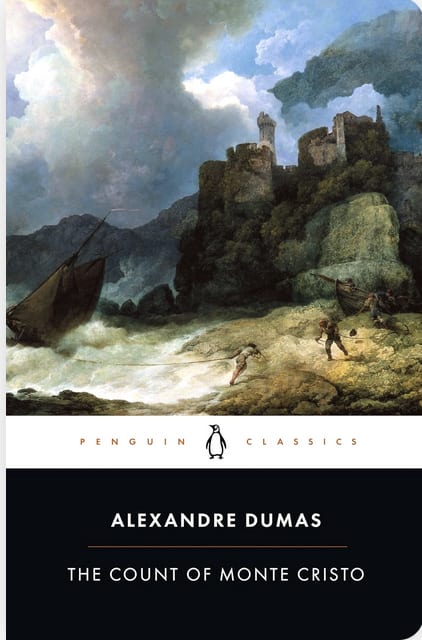
At Gate 38, I sat with a book far too large for domestic travel: The Count of Monte Cristo. Not the travel edition, not the Kindle file, but a thick, battered paperback whose spine had been cracked by other hands long before mine. It was the kind of book that made strangers glance twice, the way they might at someone trying to board a flight with a steamer trunk.
I told myself I was bringing it because a 2 hour flight could be stretched – or deepened – into something else entirely if the right book sat in your lap. In truth, I think I wanted another journey entirely, one not governed by boarding groups and baggage tags.
When the boarding call came, I stepped into the slow shuffle of passengers. The cabin smelled faintly of instant coffee and recycled air. Somewhere behind me, a child was protesting seatbelts; ahead, a man in a blazer was already on a call he would not hang up until take-off. The Count waited in my bag, patiently.
The Plot Beneath All Plots
Christopher Booker’s The Seven Basic Plots insists that every story belongs to one of seven archetypes. The Count of Monte Cristo is, quite decisively, a “Rebirth” narrative disguised as a “Tragedy” before blooming into a “Quest”.
First, tragedy: a young man, Edmond Dantès, betrayed, imprisoned, stripped of his life. Then the slow-motion rebirth: fourteen years in the Château d’If, where time becomes both captor and teacher. And finally, the quest: for justice, for revenge, for something so close to love that it still stings to call it by name.
By the time the aircraft nose lifted off the tarmac, I could feel the novel’s architecture pressing against the thin plastic of the armrest – vast, deliberate, unhurried.
Dumas, the impatient architect of patience
Alexandre Dumas was a man allergic to waiting. He spent money faster than he earned it, kept lovers in multiple cities, quarrelled with collaborators, and built a fantasy château named after The Count of Monte Cristo – only to lose it to debt. Yet this restless man wrote one of literature’s great meditations on patience.
Paris met the novel in instalments, learning to wait alongside Edmond. Dumas, the son of a Haitian-born general who rose and fell spectacularly, knew reversals. His fiction sparkled with masks and disguises, but here, time itself was the mask.The Château d’If chapters stretch across years of silence. Later, Parisian scenes tighten into deliberate knots. Beneath the banquets and duels runs a meticulous ledger of injuries, kept just alive enough to remain sharp.
Somewhere over everstreching grey skies, the beverage cart squeaked into the aisle. I refused the tea; Edmond was still in his cell, counting days in a language only he and the stones understood.
The inheritance of revenge
Revenge is older than literature. The Greeks staged it; Shakespeare summoned it with ghosts; Indian epics braided it into vows. Across centuries, it promises balance, yet leaves a residue balance cannot cleanse.
Monte Cristo may be the most patient revenge story ever written. Edmond does not rage. He learns. Knowledge is his weapon, time his ally, money his amplifier. He studies men the way a jeweller studies flaws, then builds settings for those flaws to sparkle in public ruin. He does not throw a single punch; he arranges rooms where other men punch themselves. It is artful and terrible. You admire the composition even as you flinch from the blast.
And still – precision cuts the wrong flesh. Innocents are grazed. Pain trickles into places Edmond never aimed. By the time the seatbelt sign blinked on for descent, it was clear that revenge had not returned him to himself.
Mercedes, again, and the weather of absence
Mercedes is the novel’s still point. She loved Edmond before the dungeon, grieved him as dead, and endured the slow erosion of hope until she married his rival – not from betrayal, but from the raw necessity of survival.
Her marriage is a life in half-light: comfort without love, respect without safety. When Edmond returns, cloaked in wealth and anonymity, she recognises him instantly – not by face, but by the gravity of his gaze.
Their reunion is neither tender nor cruel; it is thick with everything unsaid. Mercedes sees what revenge has made of him and asks, not only for her family’s sake but for his, whether the man she loved survives inside the instrument he has become.
Somewhere beneath us, the Arabian Sea came into view. I closed the book for a moment, as if to grant them both the privacy of that question.
Why this book taught thrillers how to breathe
Modern thrillers run; Monte Cristo walks. Every step is placed. Every delay is a setup. It is orchestration rather than chase – threads crossing, breaking, rejoining.
From soap operas to prestige TV, its fingerprints are everywhere: the hidden identity, the return from the dead, the drawing room doubling as courtroom. But Dumas refuses the empty flourish; each reveal changes the moral temperature of the room.
On a flight, this slow rhythm becomes a form of travel itself – one measured not in nautical miles, but in the distance between Edmond’s restraint and his release.
After the last page
Some books you finish; others finish you.
When the captain announced our descent into Mumbai, I was still in Marseille. The cabin lights came on with that unkind brightness, the kind that makes faces look a little more tired, coffee cups a little more empty. Around me, people reached for phones and overhead bags; I was still holding the Count’s world like an unopened letter.
The book stayed with me beyond baggage claim – in bank queues, in hospital corridors, in the quiet politics of offices. It kept asking, without mercy: what are you doing with time?
It left me with less appetite for vengeance, more for precision. Less for winning, more for knowing exactly what should be preserved and what should be let go. I thought of Edmond’s long years in a stone cell, the economy of his patience, the way he refused to spend his anger all at once.
When the plane’s wheels touched down, I realised “Wait, and hope” is not softness. It is a strategy. It is how you survive the longest corridors in life – airport or otherwise – when you cannot see the door but must keep walking toward it, certain only that somewhere ahead, the air will change.