There is a kind of grief that turns you into a magnet. People gather. They quiet their voices. They offer tea. They check in. They lower the lights. They give you time. In grief, the world makes room.
But joy?
Joy makes people uncomfortable.
There is no collective script for handling someone who is visibly, unapologetically happy. It is too loud, too naive, too much. If you laugh too long, people start looking at the clock. If you celebrate too hard, you are accused of showing off. If you smile too brightly in a group, someone inevitably says, “What are you so happy about?”
This is the strange caste system of modern emotion. Sadness is serious. Joy is frivolous. Vulnerability is sacred, but only when it bleeds. Delight must be earned, or else hidden. We live in a time where emotional intelligence is prized, but only if it speaks in the language of ache.

The Cult of Palatable Pain
Sadness has become culturally legible. It is studied, written about, aestheticized. In the last decade, the language of therapy has entered everyday speech. We talk about trauma, boundaries, nervous systems. We analyze our attachment styles over dinner. And this is, in many ways, a necessary correction. For too long, we were taught to suppress pain, to mask fear, to keep sadness behind closed doors.
But something strange has happened on the other side of this emotional awakening.
We now treat sadness as evidence of depth. A performance review that goes badly is an invitation to sit with failure. A breakup becomes a chapter of post-traumatic growth. Burnout, when wrapped in just enough self-awareness, becomes virtuous.
To be visibly sad is to be taken seriously. To be joyful is to be suspect.
Why Are You Laughing?
Laughter, in contrast, is not easily codified. It resists theory. It breaks timing. It interrupts flow. It derails the mood. In a world obsessed with managing affect, joy is unmanageable.
Consider the norms of academic or professional environments. Grief and loss are approached with reverence and protocol. In a seminar on death or trauma, students lower their voices. They lean forward. They defer to emotional gravity. But bring in a passage from a comedic novel and the room grows fidgety. Laughter is awkward. There is no safe structure for delight.
This discomfort has roots in culture. Philosopher Sara Ahmed writes, “Happiness can function as a technology of social regulation.” In other words, we have rules for when happiness is acceptable and when it is disruptive. Joy that comes from sanctioned sources — family milestones, professional wins, weddings — is allowed. But spontaneous, uncontained joy feels unruly. Even threatening.
Neuroscientist Lisa Feldman Barrett explains that emotions are not universal hardwired experiences. They are constructed in the brain through prediction and cultural context. If our culture codes sadness as intelligent and joy as childish, then our brains learn to suppress the latter in order to belong.
It is no wonder, then, that people feel safer confessing their fears than admitting they are lighthearted. To laugh fully, without self-editing, is to risk being misread. Or worse — ignored.

The Policing of Pleasure
Especially for women, joy is almost always conditional. You must have suffered first. You must show your gratitude. You must be modest about your delight. To be a woman laughing loudly in public is still, in many spaces, a transgression. There is always someone ready to say, “You’re too much.”
Sociologist Arlie Hochschild called these unwritten expectations “feeling rules.” These rules are not neutral. They are shaped by class, race, and gender. And they are enforced quietly — through side glances, arched eyebrows, and social withdrawal from anyone who radiates too much pleasure.
A man who broods is mysterious. A woman who beams is naive.
This asymmetry shows up everywhere – from how leadership is evaluated to how stories are told. Leaders who are serious are praised for their gravitas. Leaders who are joyful are told to be careful with tone.
Melancholy as Merit
Melancholy has become a currency of credibility. The internet has made it easier than ever to perform your inner life. And the performance of sadness carries more weight than the performance of joy.If you post about your anxiety, people respond with tenderness. If you post about your delight, they scroll faster. You must earn the right to be happy by showing how hard-won it is. You must share the trauma first so the joy feels deserved.
There is an economic logic here too. Sadness is now a genre. In essays, podcasts, poetry, and performance art, we valorize pain. As critic Leslie Jamison observes in The Empathy Exams, we reward suffering when it is articulated with complexity. Pain becomes the price of admission into moral seriousness.
But this has a cost.
We forget that joy can be just as complex. Just as hard-won. Just as necessary.
Writer Ross Gay, in his Book of Delights, makes a quiet rebellion out of daily happiness. He calls it “a resistance to the despair that often wants to dominate the narrative.” His joy is not naive. It is fiercely observed, politically awake, and grounded in attention.
This is what we lose when we rank emotions. We turn away from joy too quickly. We dismiss it as incidental rather than essential.
The Complexity of Happiness
In coaching conversations, I often see this hierarchy play out in real time.
People can talk about failure with precision. They can name the shape of their sadness. But ask them what brings them joy – real, irrational, childlike joy and they hesitate. They feel embarrassed. They smile with apology.
Joy is too slippery for analysis. It is not data driven. It does not lend itself to PowerPoint slides. It is not actionable.
But joy is also not simplistic.
It is layered. Intermittent. Often tinged with longing or fear. As Brené Brown notes, “The most terrifying, difficult emotion we experience as humans is joy.” Because to feel joy is to be vulnerable. It is to acknowledge how much you love something. And how much it would hurt to lose it.
Real joy is not the absence of pain. It is the presence of aliveness.
Art That Dares to Delight
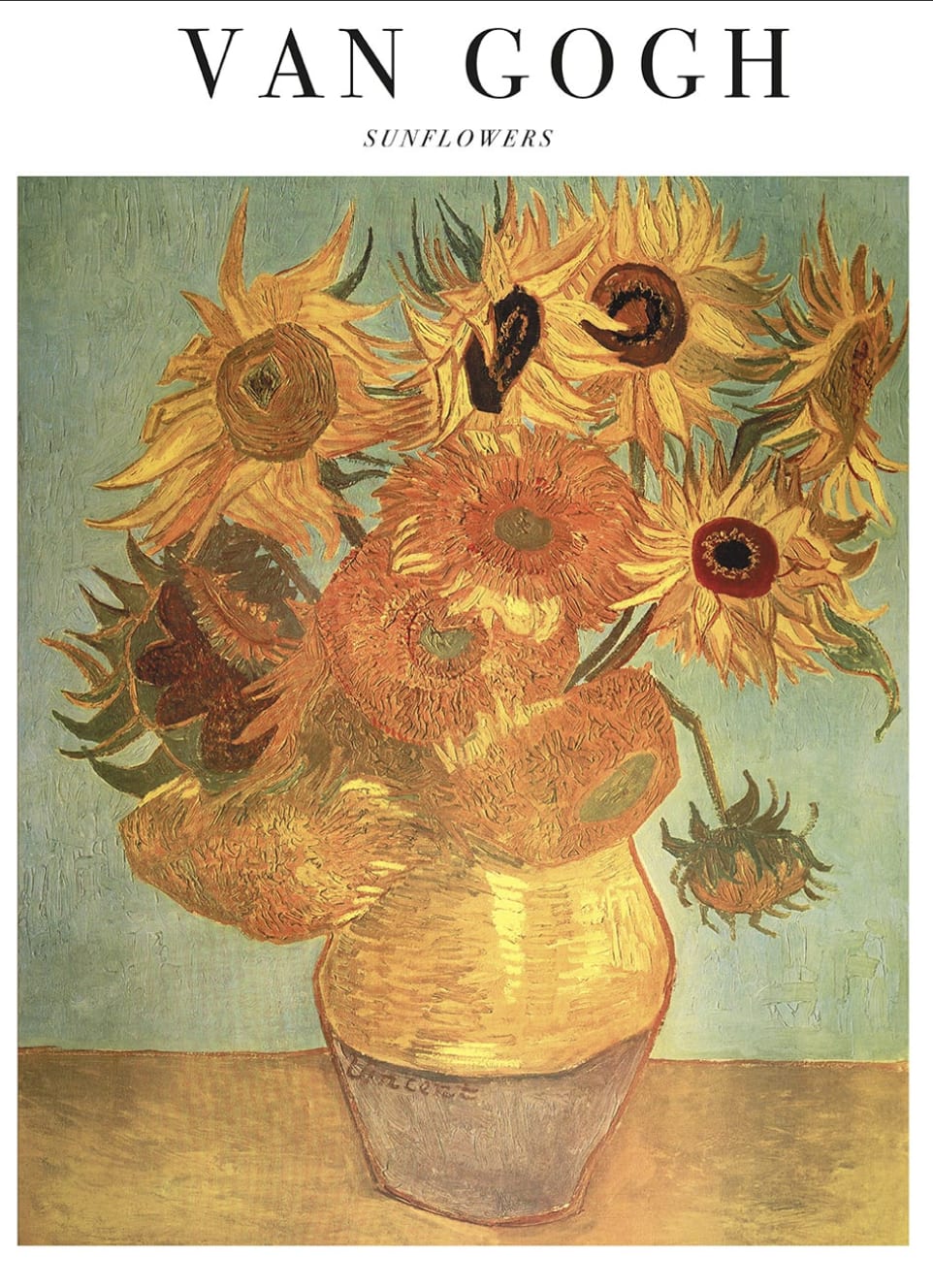
We revere artists who suffered. We romanticize their darkness. But we forget the complexity of the light they painted with. Vincent van Gogh is the most obvious example. We remember the severed ear. The asylum. The suicide. We rarely sit with the joy in his work – the yellows, the thick sunflowers, the swirling skies. But Van Gogh did not paint light because he was happy. He painted light because he needed it. Because he was reaching for something larger than despair. Because light was the only language left to him when words failed.
In a letter to his brother Theo, he wrote, “I want to paint men and women with that something of the eternal which the halo used to symbolize, and which we seek to convey by the actual radiance and vibration of our coloring.” Joy for Van Gogh was not decorative. It was devotional. A way of wrestling with darkness by naming what it obscured.
And yet, even in galleries today, his bright works are seen through the lens of sadness. The light is read as manic. The color is interpreted as a symptom.
We do not know how to see joy without suspicion.
We flatten it. We misread it. We call it a phase. Or a mistake. Or an illusion.
But artists like Alma Thomas, Hilma af Klint, and Howard Hodgkin have always known better. They painted joy not as escape, but as a way of knowing. A way of being with the world that refused cynicism.
Let Joy Be Loud
We need new rituals for joy. We need group chats where celebration is not mistaken for arrogance. We need meetings where enthusiasm is not mocked as naive. We need public spaces where delight can be shared without softening it with irony.
We need to let women laugh. We need to let men dance. We need to let children shriek with pleasure and not be told to behave.
And we need to let ourselves feel light. Even when the world is heavy. Especially then.
The Discipline of Delight
To hold joy in this world is not to deny sorrow. It is to know it. And still sing. It is to stop apologizing for pleasure. To stop ranking emotions as if some are noble and others embarrassing. To stop thinking of happiness as a footnote. Joy is not trivial. It is what makes the sorrow worth surviving. It is what makes you human.
Let it in.
Let it stay.
Let it be loud.